Mechanisms of Female Reproductive Aging
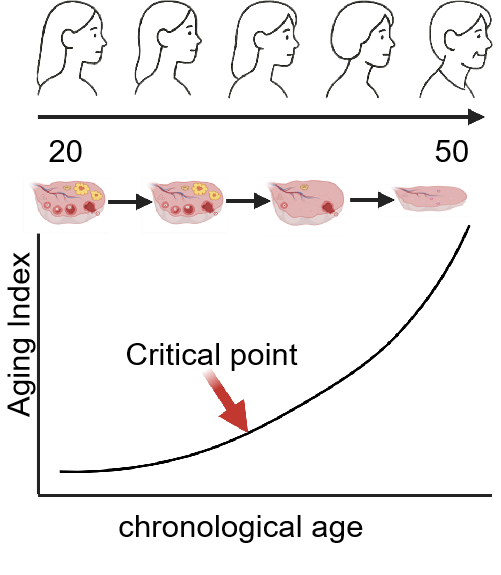
The ovary is one of the first human organs to show signs of aging, yet the continuous process of its decline is not well understood. Our lab's foundational study (Nature Aging, 2025) provided a critical snapshot by building a single-cell multi-omics atlas comparing the ovaries of young and menopausal women. While this research identified the mTOR pathway as a key driver of ovarian aging , its focus on two distant time points means the critical transition period-when aging suddenly accelerates-remains a black box. Our lab now aims to map this entire process. To achieve this, we are building a spatiotemporal multi-omic atlas of the human ovary covering the entire reproductive lifespan (20-50 years). By integrating single-cell transcriptomics (snRNA-seq), epigenomics (snATAC-seq), and spatial transcriptomics, we will reconstruct the aging trajectory of every cell type. Using advanced computational models, we will pinpoint the key "critical point" where aging suddenly accelerates and identify the core gene regulatory networks and molecular drivers responsible for these changes. This research will provide an unprecedented view into how the ovary ages and uncover novel targets for interventions to extend female reproductive health.